Coastal resilience is increasingly critical in the face of our planetary polycrisis, many aspects of which manifest directly at Wagonga: sea level rise, coastal inundation, erosion, estuarine flooding and extreme weather. Like many shorelines, Wagonga Inlet was transformed in the past, removing coastal swamps and tidal flats and imposing landfilled seawalls and other foreign infrastructure.
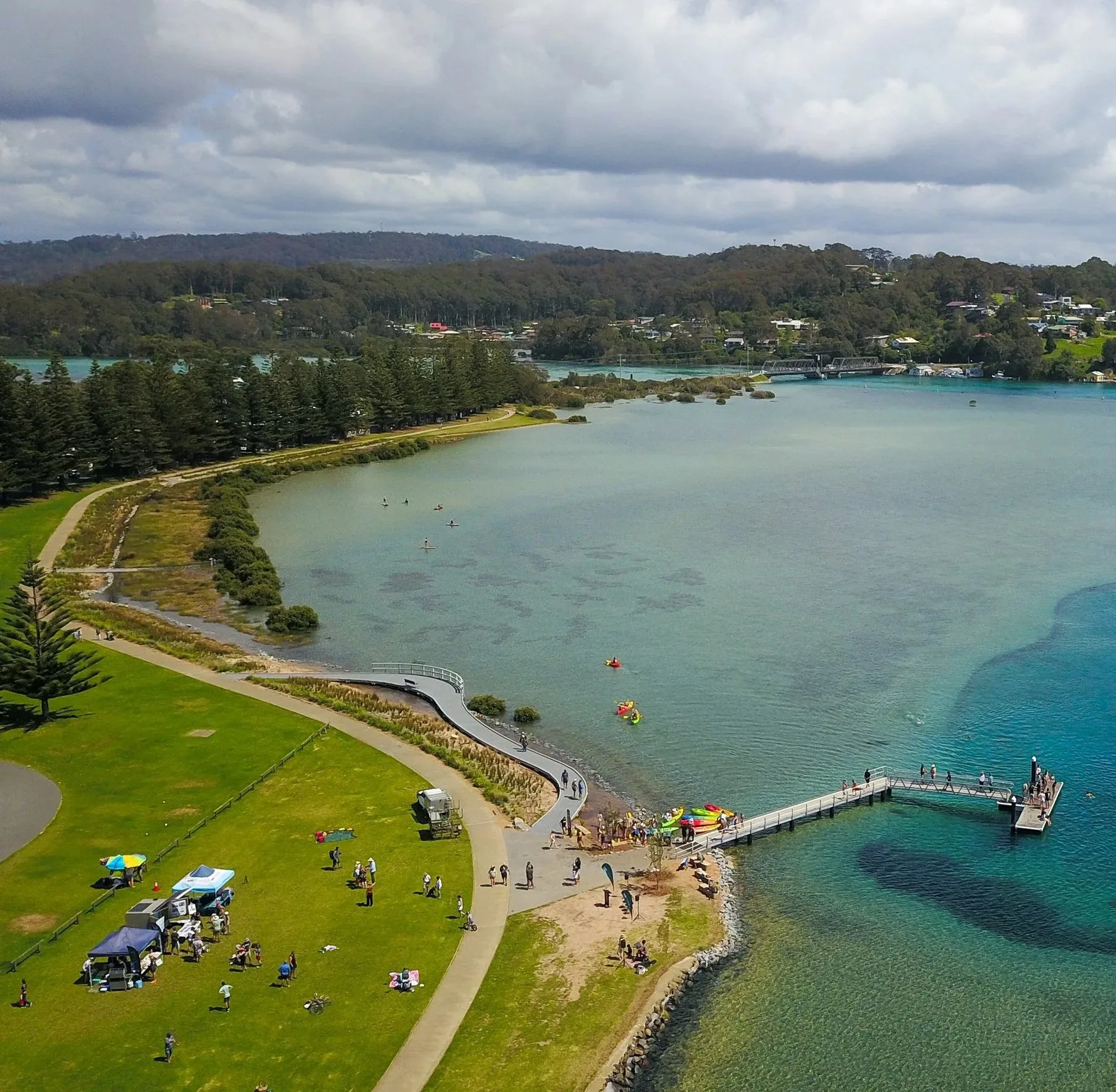
The obsolete seawall fronting the township's major coastal public space needed replacing. The Living Shoreline re-establishes the site as an expanded threshold, mingling marine and terrestrial environments and allowing multiple species to adapt together to changing conditions, present and future.
Coastal ecologists, landscape architects, fisheries scientists, architects, ocean conservationists, urban designers, marine engineers, community members and local government representatives worked collectively to address aspirations for ecosystem repair and restoration. The process intertwined the community's social, cultural and environmental needs with those of coastal ecosystems and natural habitats.
Natural processes – Rather than resisting erosion and accretion, the project leverages these dynamics to inundate, cleanse and replenish the foreshore. Natural processes operate within a guiding framework, creating a fluid, porous and resilient coastal zone rather than an impermeable line.
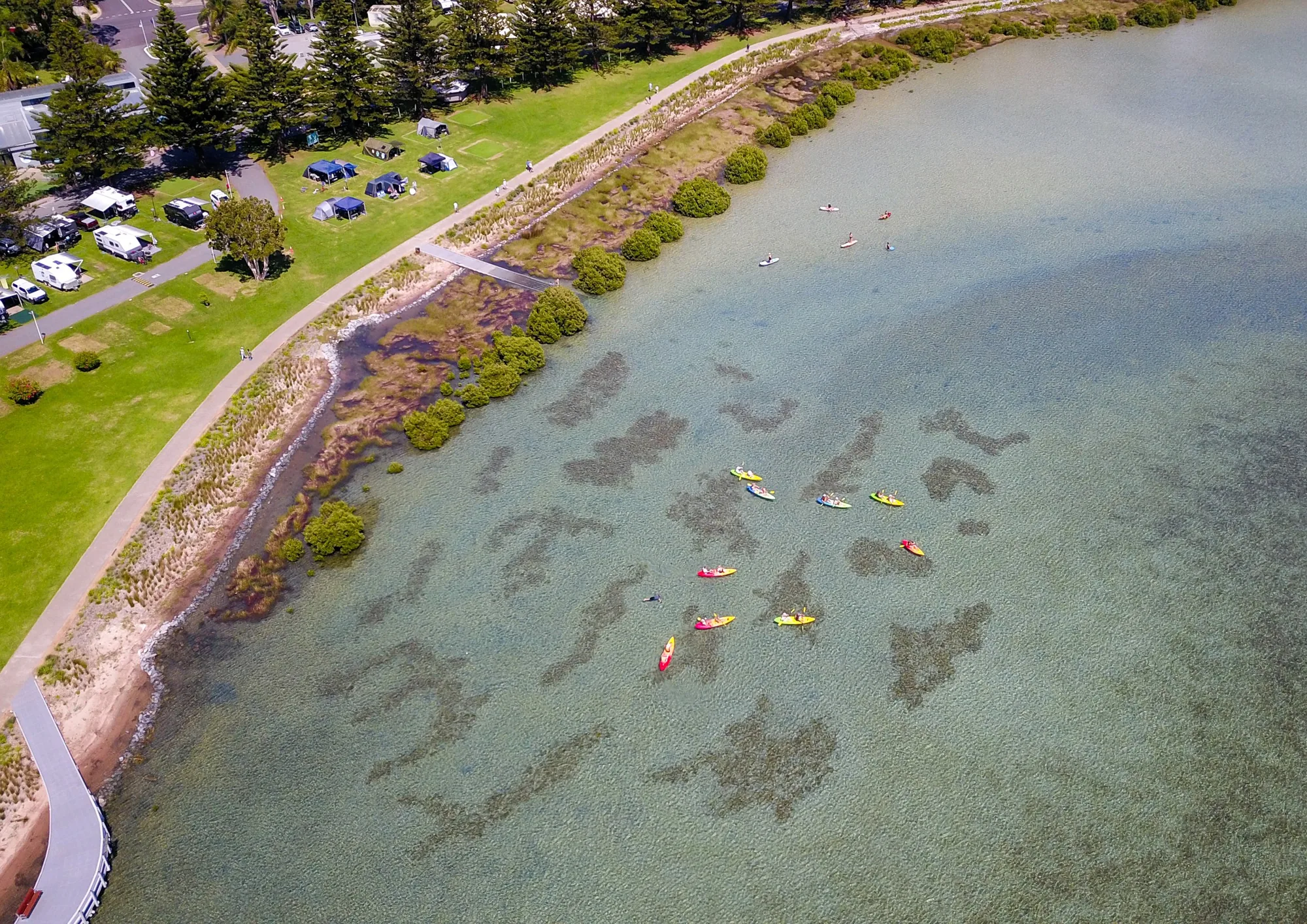
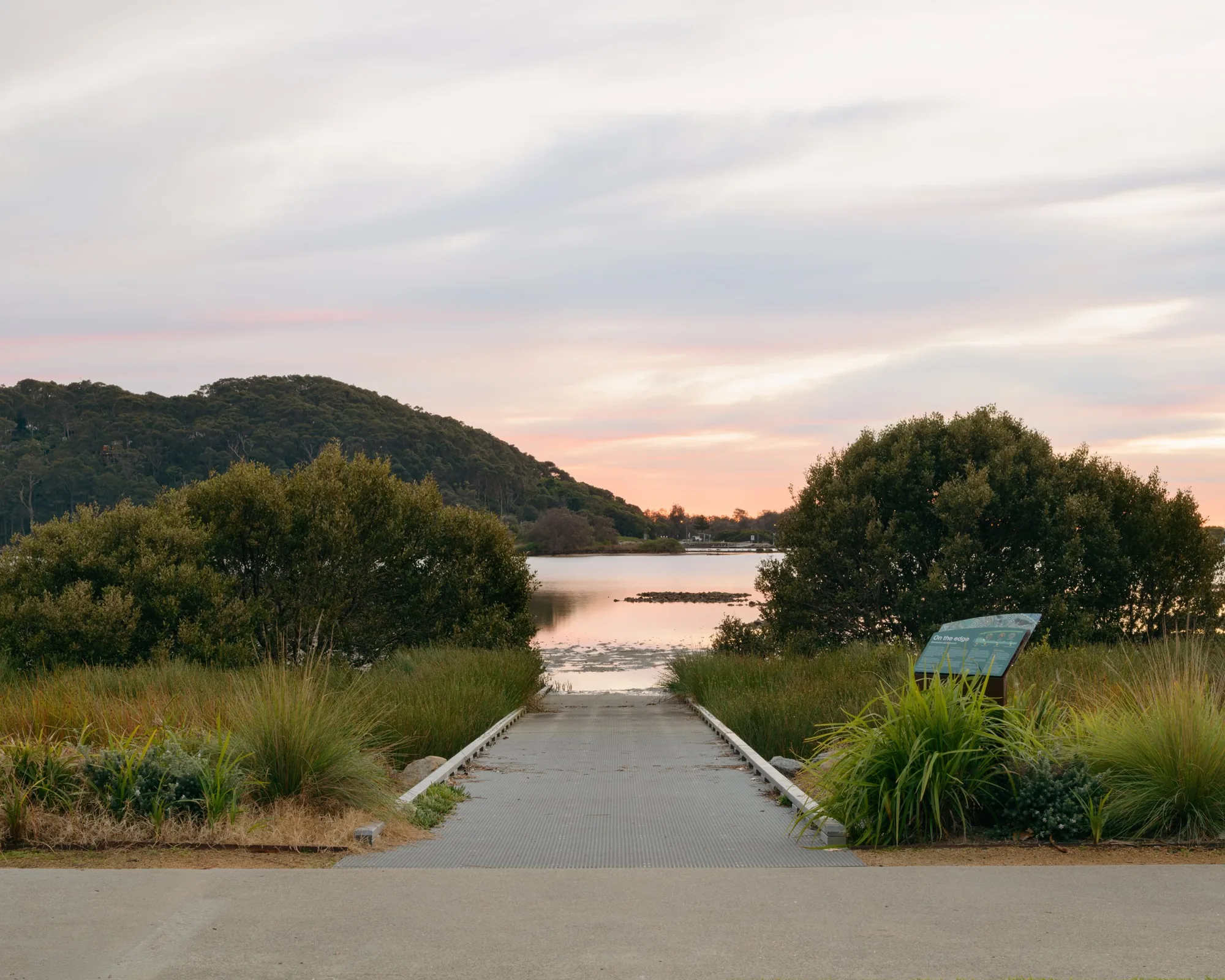
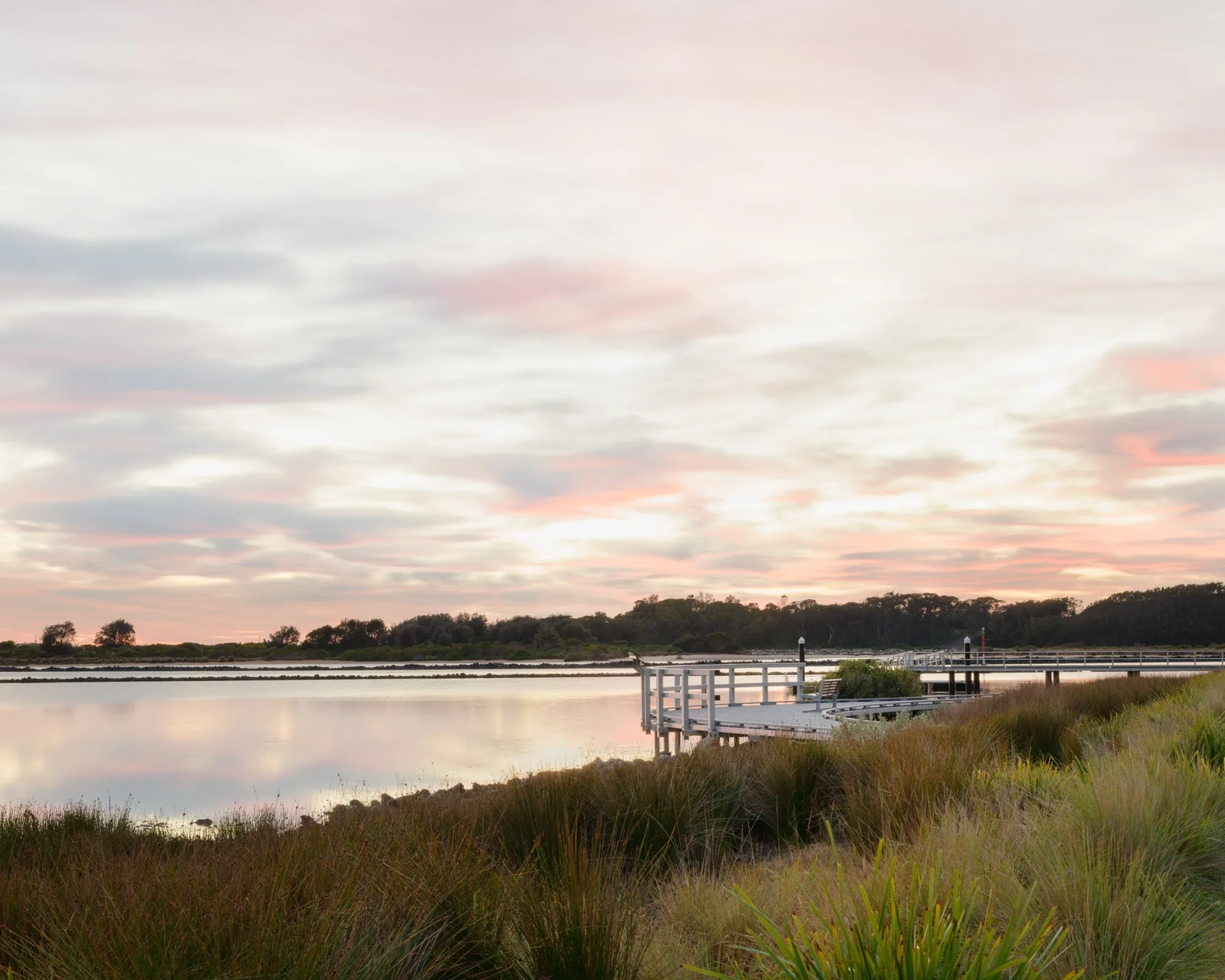
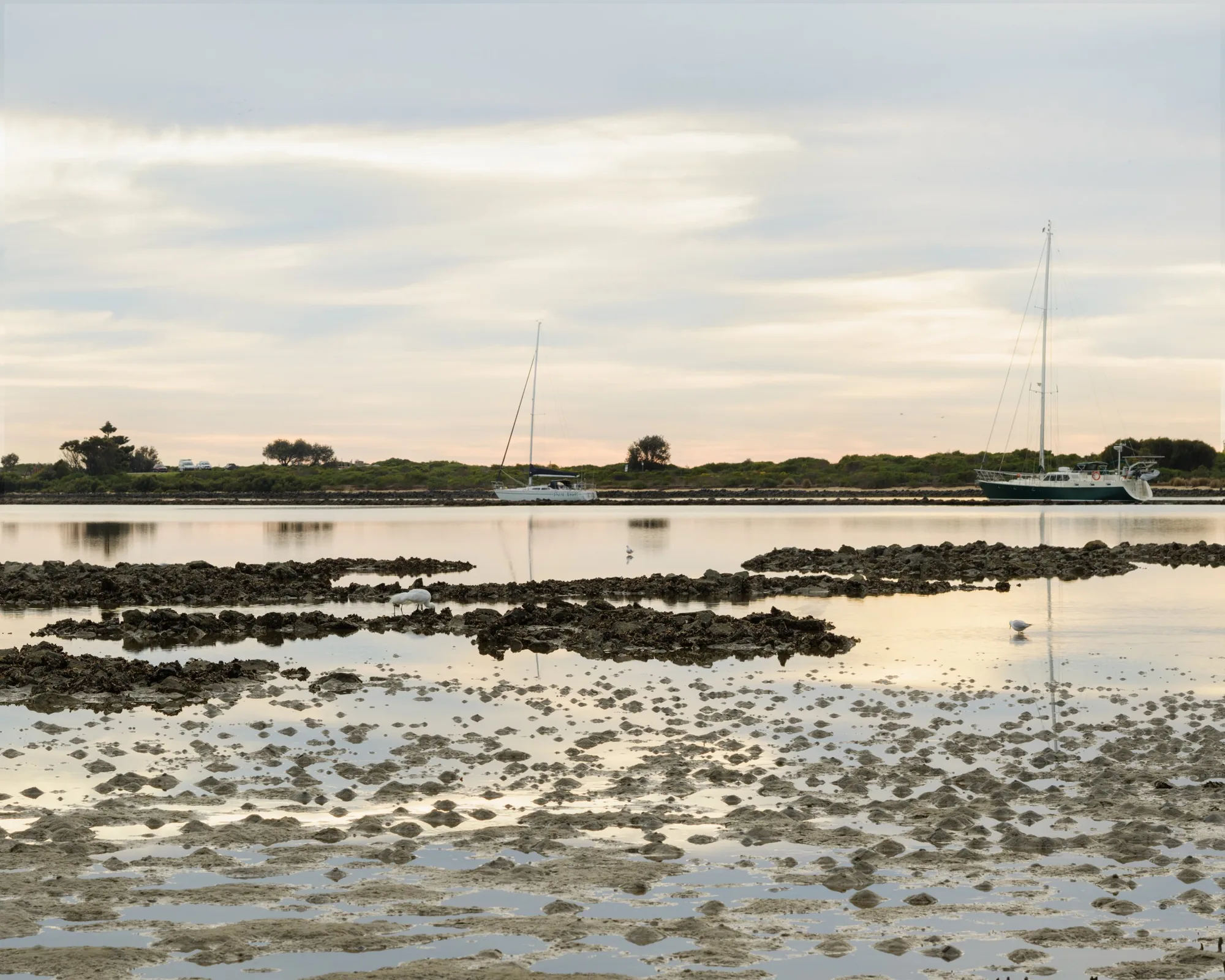
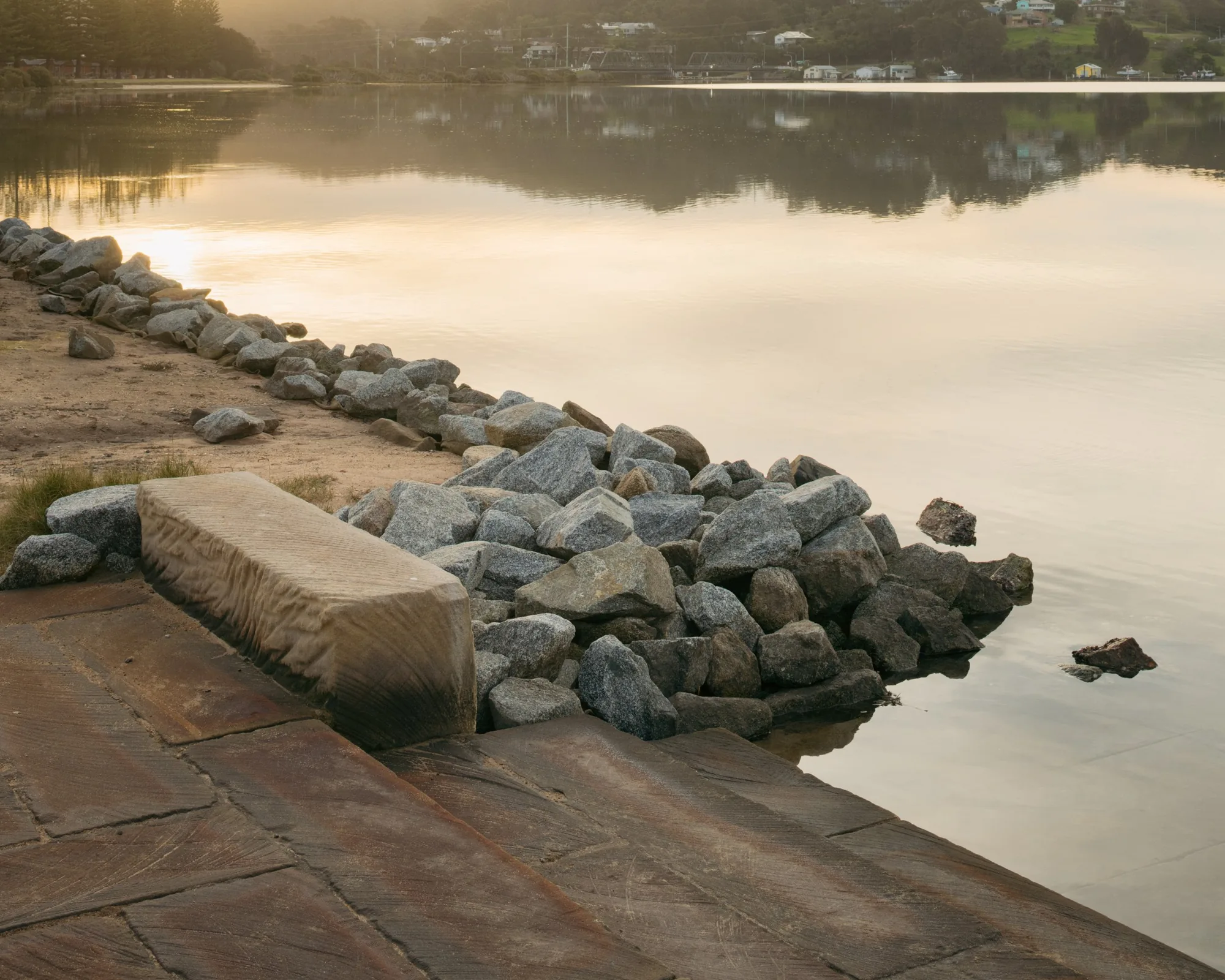
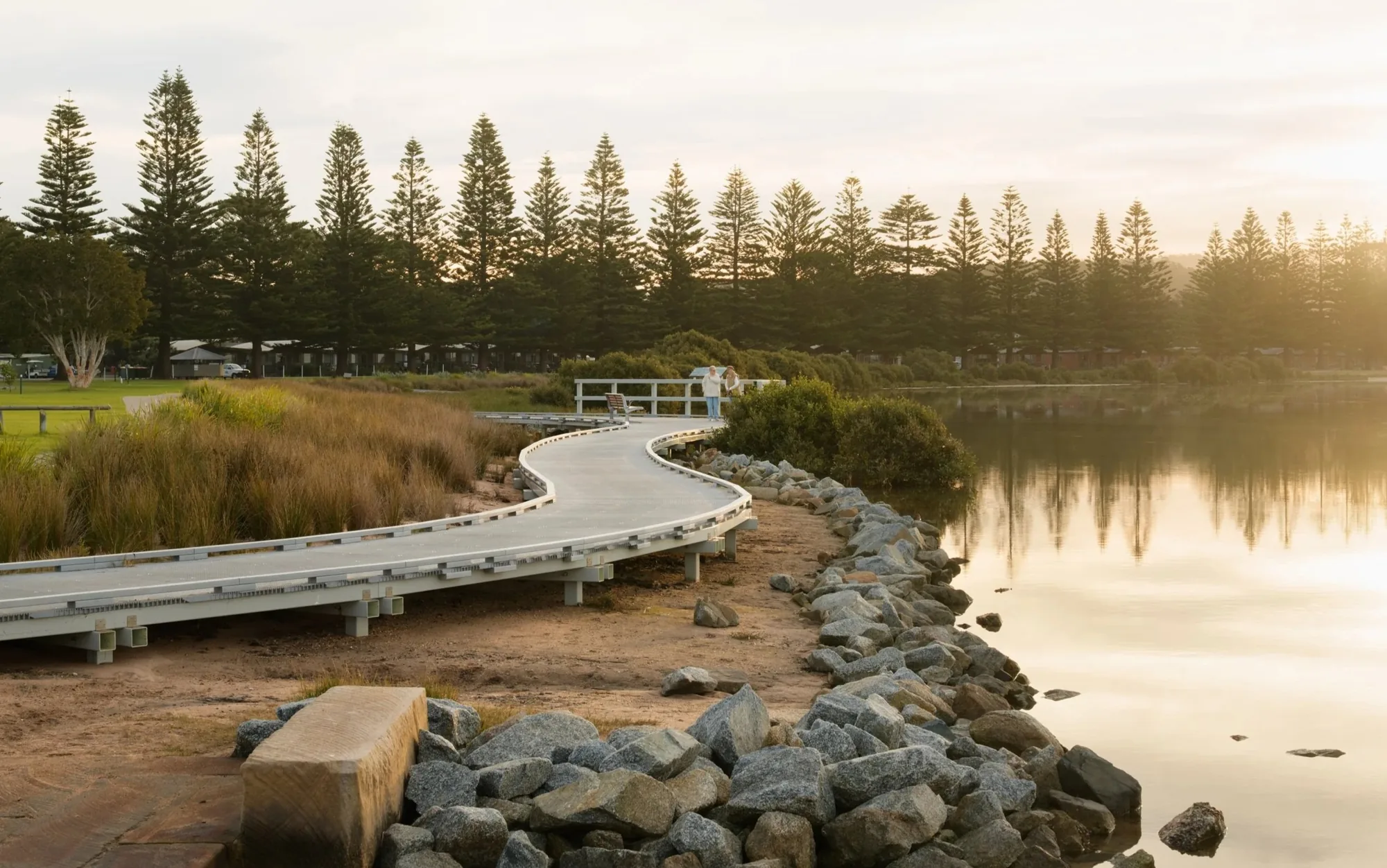
Restored systems – Extensive saltmarsh planting overlays the restored intertidal zone, connecting reinforced stone shelves with existing mangrove and saltmarsh remnants. The foreshore graduates from terrestrial planting through intertidal habitat to sand flats and subtidal oyster reefs, allowing water to ebb and flow through the site and regenerate ecosystems over time.
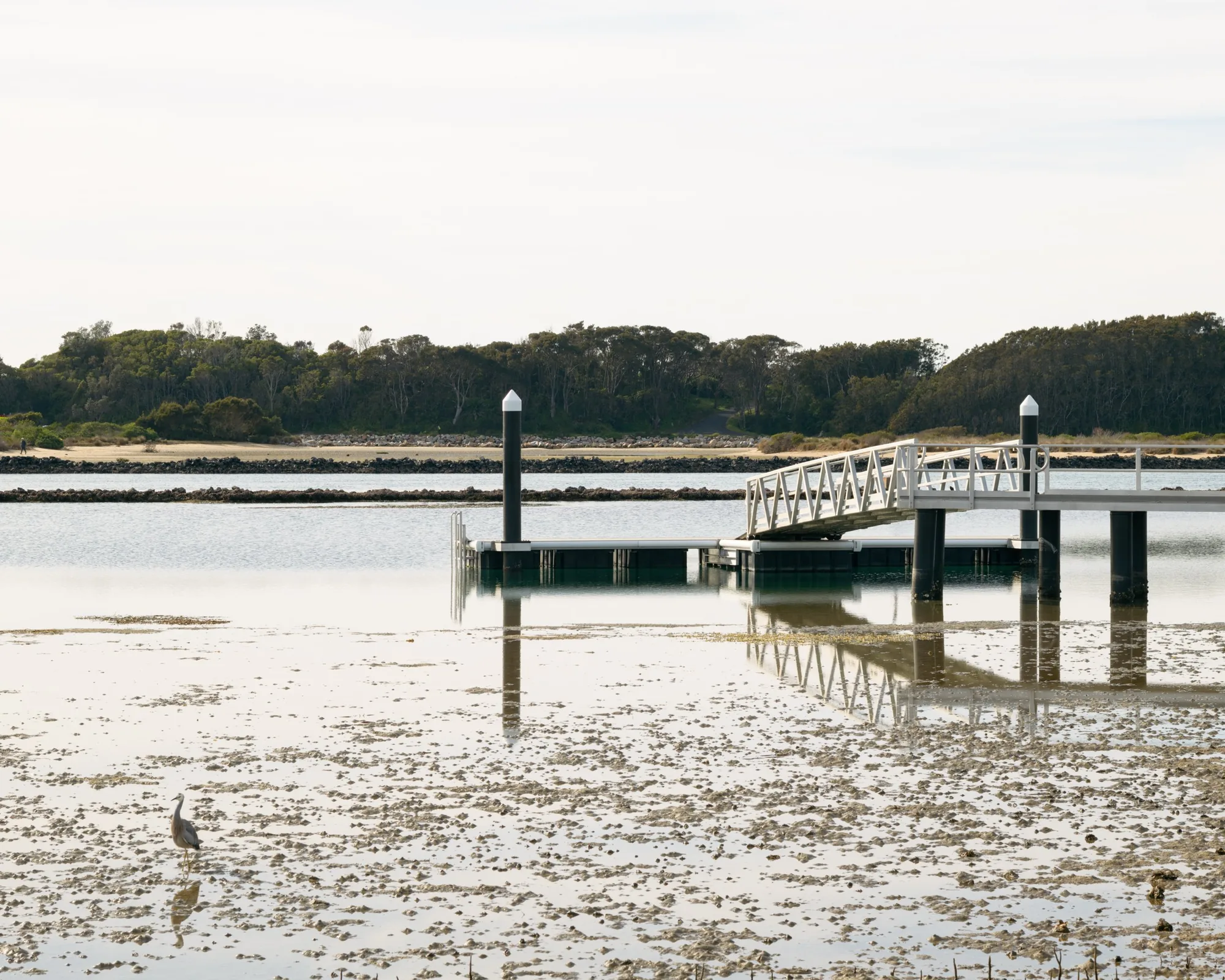
Tidal resilience – Offshore oyster reefs restore once-abundant shellfish ecosystems as living infrastructure. They filter seawater, support marine life, reduce seabed erosion and enhance biodiversity, connecting subtidal, tidal and terrestrial systems into a renewed foreshore ecology.
Accessibility – An improved foreshore walkway, elevated boardwalk, seating, rock shelves, watercraft ramp, jetty and access to tidal flats bring people into closer contact with the restored landscape. Access is carefully choreographed to heighten the physical experience of the foreshore while protecting its recovering habitats, balancing community use and appreciation with ecological restoration.